
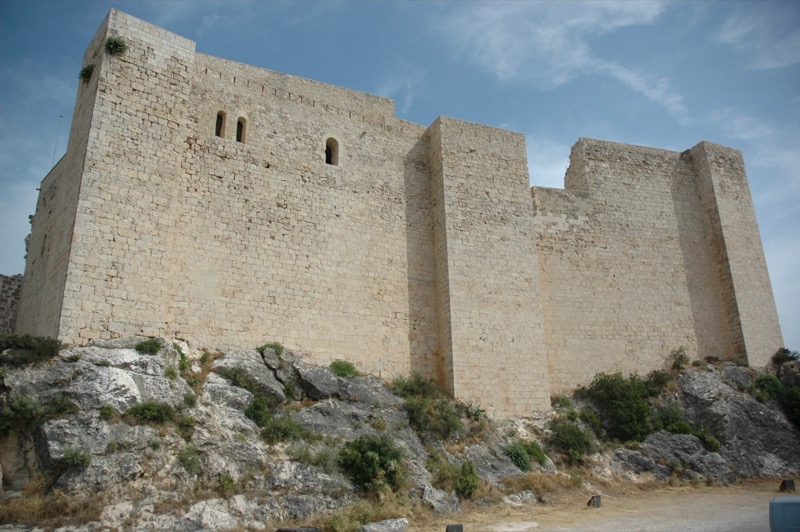
Rising from a rocky crag above the Ebro river, the Castell de Miravet is one of the finest surviving examples of Templar Romanesque military architecture in Europe. Its Arabic name — from murābiṭ, meaning watchtower — reflects its origins as a Moorish frontier fortress built in the 9th–10th century to guard the vital Ebro crossing.
Ramon Berenguer IV, Count of Barcelona, captured Miravet in 1153 as part of the Christian Reconquista. He immediately granted the castle to the Knights Templar, who rebuilt and expanded it into the powerful fortress that stands today. Under the Templars, Miravet became one of their most important Iberian strongholds — a fortified commandery and administrative centre for the order’s extensive landholdings in southern Catalonia.
The castle’s Templar story ended dramatically. In 1307, King Philip IV of France ordered the arrest of all Templars across Europe. The knights of Miravet refused to surrender and held out for over a year before finally capitulating to King James II of Aragon in 1308 — one of the last Templar fortresses in the Iberian Peninsula to fall.
After the dissolution of the Order, Miravet passed to the Knights Hospitaller and its military importance gradually faded. Remarkably, it survives almost exactly as the Templars left it — a complete Romanesque apse, vaulted halls, a cloistered courtyard, and the massive walls that defied a royal siege for more than twelve months.
A unique element of any visit is the barca de pas, a traditional rope ferry that still crosses the Ebro below the castle, one of the last operating hand-drawn ferries in Catalonia.