
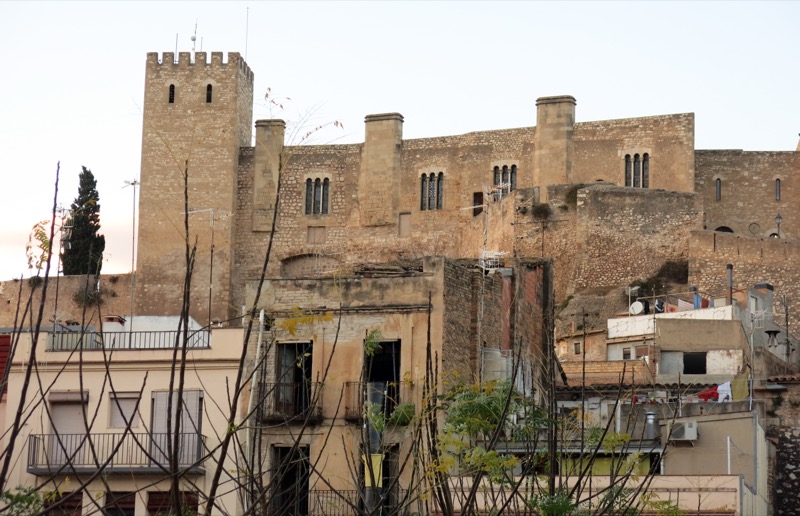
Commanding the Ebro valley from its hilltop perch above Tortosa, the Castell de la Suda has witnessed an extraordinary sweep of history — from Roman foundations through Visigothic occupation, Moorish rule, Christian reconquest, and royal residence to its current incarnation as a Parador hotel.
The name “Suda” derives from the Arabic word for citadel, reflecting the castle’s most significant development under Moorish rule from the 8th to 12th centuries, when it was the seat of the Taifa of Tortosa. The Moors constructed the core of the current fortification including the cisterns, towers, and the distinctive horseshoe-arched gatehouse. Tortosa under Moorish rule was a prosperous cultural and commercial centre, and the Suda was its administrative heart.
In 1148 Ramon Berenguer IV, Count of Barcelona, captured Tortosa after a lengthy siege, bringing the Suda into the Crown of Aragon. Successive Catalan-Aragonese monarchs used it as a royal residence — Jaume I was born nearby in 1208 and had close ties to the city. The medieval walls were expanded and a Gothic royal hall was added during this period.
The castle suffered significant damage during the Spanish Civil War (1938 Battle of the Ebro) and was subsequently restored. The Parador opened in 1976, offering guests the chance to sleep within walls that have stood for over a thousand years, with panoramic views over the Ebro delta and the surrounding mountains.