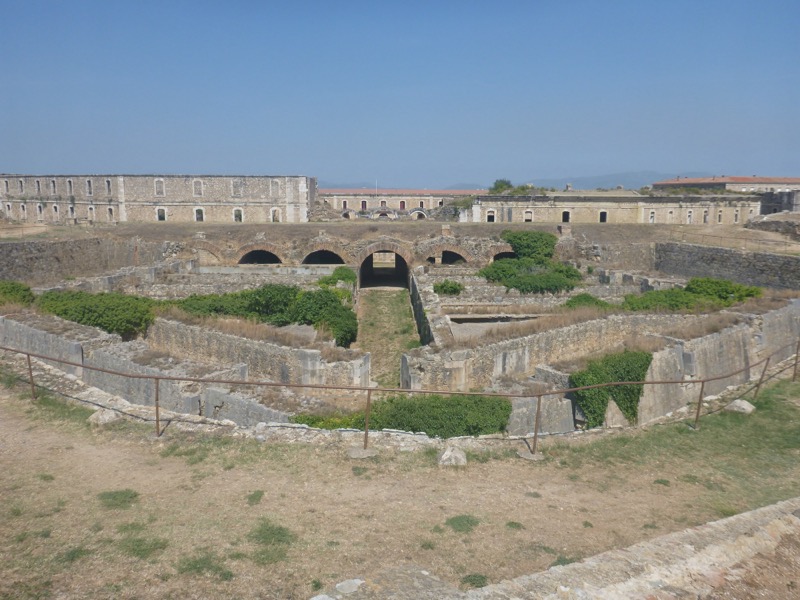
The Empordà plain is one of the most historically layered landscapes in Catalonia. Squeezed between the Pyrenean foothills and the Costa Brava coast, it has been fought over by Greeks, Romans, Visigoths, Moors, Franks, and every subsequent power that coveted the Pyrenean passes. The result is an astonishing density of castles, citadels, and fortified towns within easy driving distance of one another.
Sant Ferran — Baroque Colossus
Begin at Figueres with the largest Baroque fortress in Europe. Sant Ferran’s star-shaped walls enclose an area so vast that the entire Spanish Republican gold reserve was stored here in 1936, and the last parliament of Republican Spain met within its walls in 1939. The scale is almost impossible to comprehend on foot — bring good shoes.
Peralada — Wine, Books, and Walls
The medieval town of Peralada sits behind a ring of walls that still largely define it. Its castle, now a luxury hotel and casino, preserves a remarkable library and a wine museum — the counts of Peralada were as devoted to viticulture as to warfare.
Quermanco — Romantic Ruin
Above the village of Peralada, the skeletal keep of Quermanco crowns a volcanic rock outcrop. The castle was already a ruin by the sixteenth century, but its silhouette against the Pyrenees is one of the most photographed in Catalonia. A short hike from the road.
Requesens — Lost in the Forest
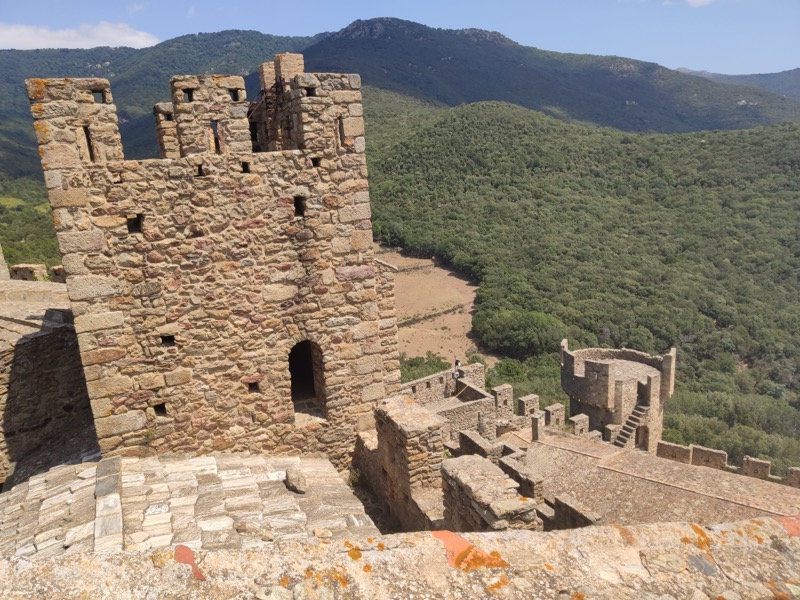
Deep in the Albera massif near the French border, Requesens is the most remote castle on this circuit — and the most rewarding. The twelfth-century core is surrounded by later medieval additions, all being slowly reclaimed by cork oak forest. Access requires a 2km forest track.
Púbol — Dalí’s Gift
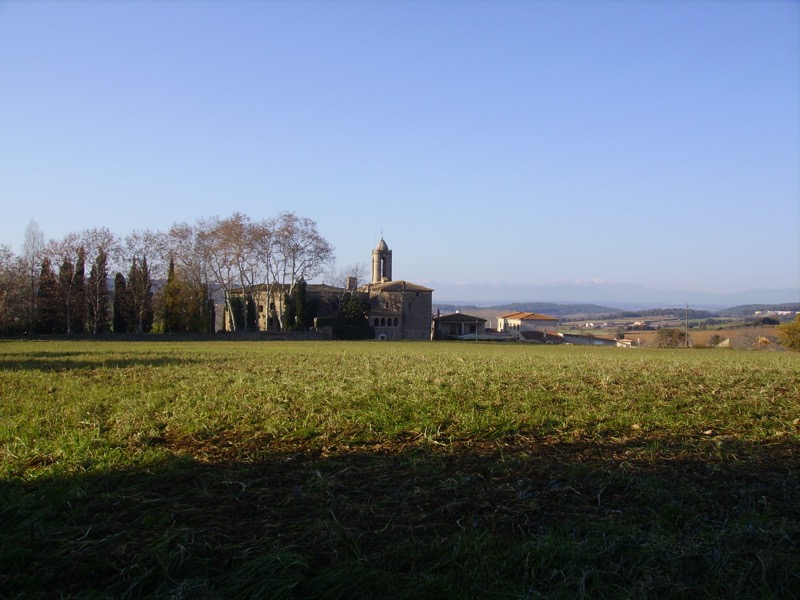
End the circuit at Púbol, where Salvador Dalí restored a Gothic-Romanesque castle as a gift for his wife Gala in 1970. The surrealist interventions — painted ceilings, furniture by Dalí, a swimming pool shaped like an amphitheatre — sit alongside genuine medieval architecture in a combination found nowhere else.