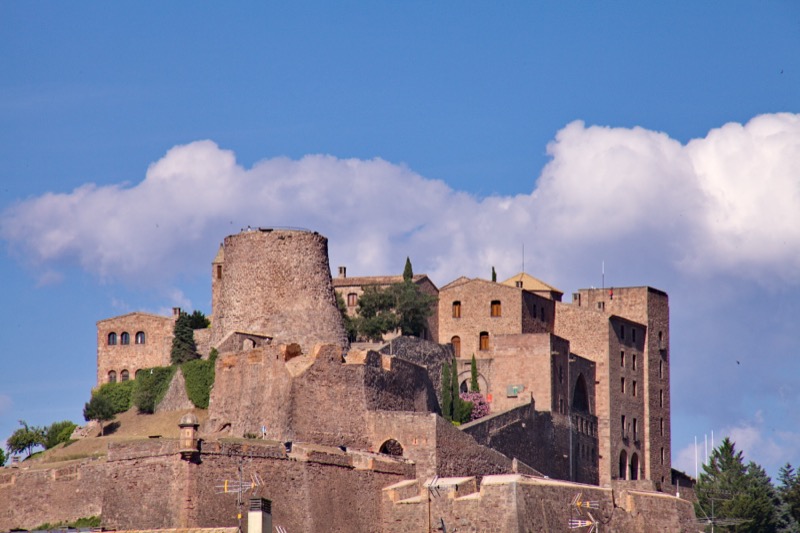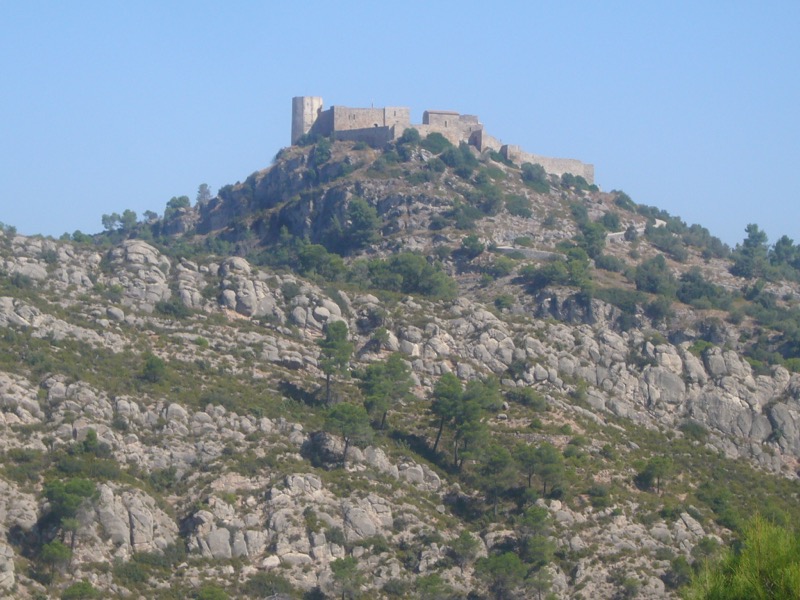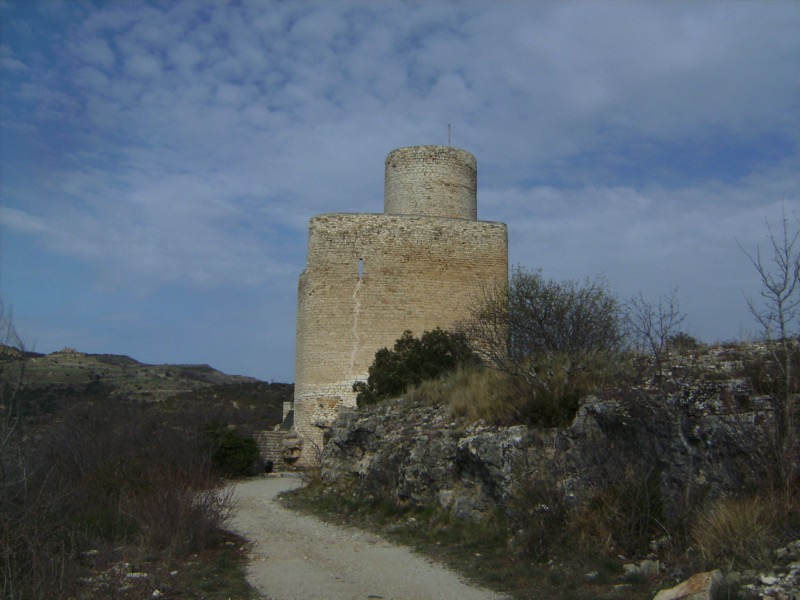
Western Catalonia — the counties of Pallars, Urgell, and Bages — was the frontier zone of the early medieval Catalan counties. Here, in the tenth and eleventh centuries, Christian lords pushed south against Moorish territory, building a chain of keeps, churches, and monasteries that are among the finest expressions of Romanesque architecture anywhere in Europe. This short route visits the three most significant surviving fortifications of that era.
Mur — The Painted Castle
Begin at Mur, an elemental Romanesque keep and collegiate church perched above the Noguera Pallaresa gorge. The church was stripped of its extraordinary twelfth-century apse frescoes in 1919, when they were sold to an American collector and are now in the Museum of Fine Arts in Boston — a loss that remains a source of grief in the region. The ruins of the castle itself, however, are as austere and powerful as any in Catalonia.
Cardona — Salt, Power, and Stone
From Mur, descend to Cardona, where the largest Romanesque castle complex in Catalonia crowns a salt mountain above the Cardener valley. The castle’s collegiate church of Sant Vicenç, consecrated in 1040, is considered the masterpiece of Catalan Romanesque architecture. The salt mines beneath the hill have been worked continuously since antiquity and can be visited independently.
Claramunt — Valley Fortress
The circuit ends at Claramunt, where a double ring of walls descends a limestone crag above the Anoia river. The castle is less visited than Cardona but more evocative as a ruin: the roofless keep, the empty hall, the broken towers, all slowly being absorbed back into the rock they were built from.