The Knights Templar arrived in Catalonia in the early twelfth century at the invitation of Ramon Berenguer III, who bequeathed them his own county in his will. What followed was two centuries of military, economic, and architectural transformation that left a permanent mark on the Catalan landscape.
Gardeny — The Templar Capital
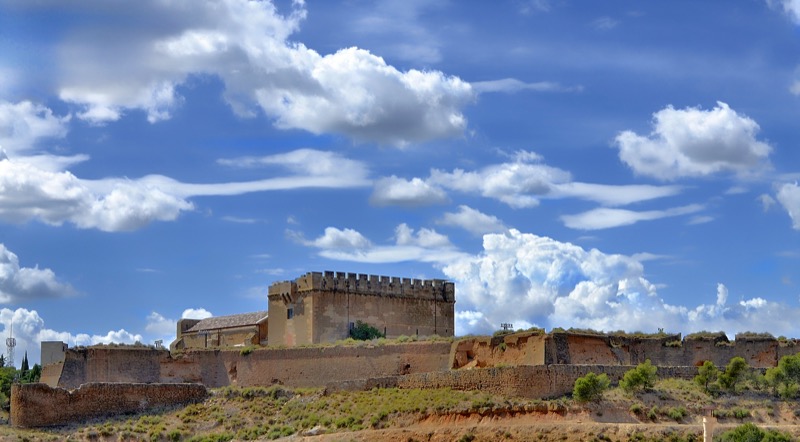
Your route begins at Gardeny, the order’s administrative headquarters in Catalonia, perched on a hill above Lleida. Founded in 1154, this was not merely a castle but a self-contained city: a church, a commandery house, granaries, and towers arranged around a central courtyard. From here the Templars administered vast estates across Aragon and Catalonia, organised the defence of the Ebro frontier, and dispatched knights to the Crusades.
Claramunt — The Mountain Sentinel
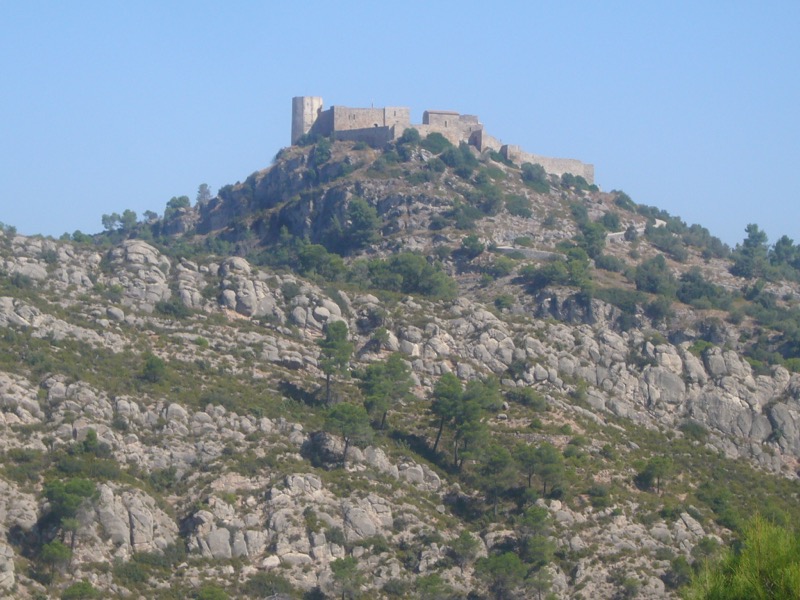
From Gardeny, the route winds southeast into the Anoia hills to Claramunt, a dramatically sited Romanesque fortress above the Anoia river valley. The castle predates the Templars but passed through their hands during the twelfth century as the order consolidated control of the road network between Barcelona and the Aragonese interior. The keep and double circuit of walls survive in remarkable condition.
Miravet — The Final Stronghold
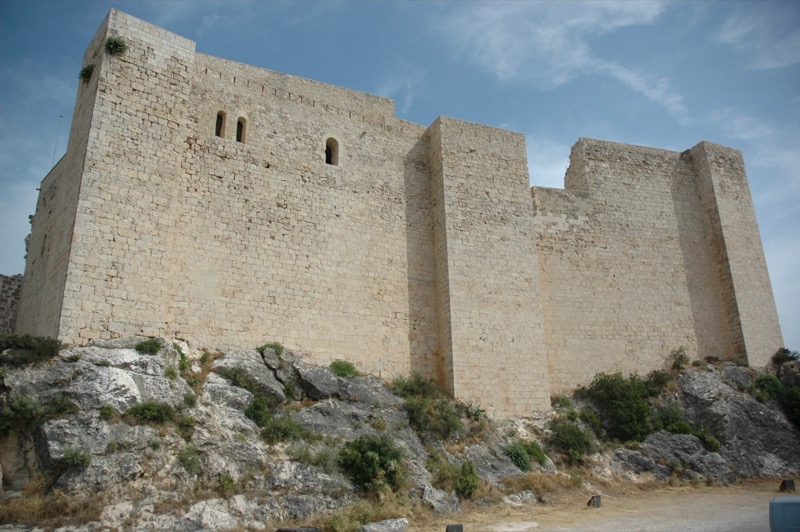
The climax of the trail is Miravet, where the Ebro bends in a great horseshoe below a limestone bluff. This was the last Templar castle in the Iberian Peninsula to fall after the order’s suppression — its garrison held out for over a year against royal forces in 1308–1309. The castle is among the best-preserved Templar fortifications in Europe, with its chapter house, refectory, and church still largely intact.